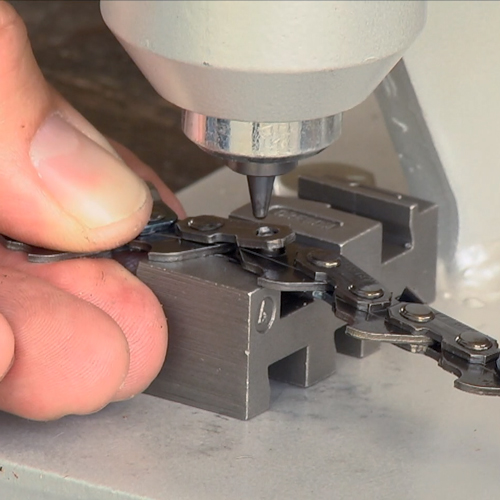
When it comes to sharpening your chainsaw chain, there are a few methods to consider. You can sharpen it by hand using a round chainsaw file or opt for the convenience of an electric chainsaw grinder. For square chains used for cutting large trees, there's the square filing method. Make sure to refer to your grinder manual for the setup and usage instructions. It's important to sharpen your chain according to the manufacturer's recommendations for optimal performance.
1. Top Plate: The top plate is the uppermost part of the cutter, serving as the primary contact point with the material being cut.
2. Cutting Corner: The cutting corner is the edge or area of the cutter responsible for making the actual cutting action.
3. Slide Plate: The slide plate is a movable part of the cutter that facilitates smooth and controlled cutting motion.
4. Gullet: The gullet is the recessed area between the cutting teeth, which helps in chip removal during cutting.
5. Depth Gauge: The depth gauge controls the amount of material removed during each cutting pass, ensuring precision and accuracy.
6. Heel: The heel of the cutter provides stability and support during the cutting process.
7. Rivet Hole: The rivet hole is the location where the rivet secures different parts of the cutter together.
8. Toe: The front part of the cutter that aids in guiding and positioning during use.
The term "square-ground filing" refers to the process of using a file to sharpen square-ground chain by hand. This technique can be more challenging than round filing and demands different methods. Achieving precise corner alignment and filing angles is crucial due to the reduced margin for error with square-ground chain. Becoming proficient in square-ground filing may take some time. It's common for beginners to not get it right on their first try, so don't be discouraged if your chain doesn't initially perform as expected.
Square-ground filing is typically not necessary for most chain saw operators, as square-ground chain is not commonly used. This type of chain is specifically designed for cutting larger trees with longer guide bars. While square-ground filing can be more challenging and offers less margin for error, the performance benefits of using square-ground chain for cutting timber can outweigh these drawbacks.
When filing a square-ground chain for the first time, it's best to work in a well-lit and stable environment, such as a shop with a workbench. It's recommended to start with a square-ground chisel chain that still has its factory grind. Do not use an old chain – especially one that has been previously filed as it may still have gullet material attached that needs to be removed.
Tip: Using a second, new square-ground chisel chain as a reference point can be helpful for understanding what the cutter teeth should look like.
Before you start filing, position your square file next to the face of a cutter tooth. Choose the corner of the file that will align with the corner of the cutter tooth. Once the corner is aligned, adust the file on its other axis so the other surfaces match up. Refer to the graphics above to ensure you have the correct filing position.
Once you've positioned your file, it's time to start sharpening.The square saw chain should be filed from the outside in, in a downward direction, as this leaves a better edge on the chromed cutting surfaces and makes it easier to maintain the file’s position, and the resulting cutting edges, in correct alignment. However, filing from the outside in will wear out your file faster.Some square saw chain users may prefer to file from the inside out, in an upward direction although this method is more challenging.Regardless of the direction you choose, ensure that your file and cutting edges stay positioned as shown in the previoussection. File all cutters on one side of the saw chain, then reverse the saw chain and repeat the process, using the same file positions for cutters on the opposite side of the saw chain.
When sharpening with a square file, start by aligning your angles. Take a few file strokes with the file, then inspect the cutter tooth for marks where the steel has been removed. Adjust the file based on what you see and continue sharpening until the tooth looks as sharp as the reference chain.
Once the first tooth is sharp, repeat the process for the rest of the teeth on the chain. It's important to ensure that each tooth is sharpened identically to maintain a consistent cut. Inaccuracies in tooth size can cause the chain to vibrate and cut unevenly. Avoid relying solely on the number of file strokes, as different strokes may remove varying amounts of material.
There are three different types of square files: hexagon, double bevel, and “goofy”.The most common file type is the hexagon shape, also known as the “triangular chisel file”. As the name suggests, a hexagonal file has six sides, with three corners acting as the filing edge. Among the three file types, the hexagonal file is the smallest in size and usually fits well into 3/8” pitch chain.The other two file types – double bevel and “goofy” have two corners for sharpening and can also be used to lower depth gauges with surfaces on the top and bottom of the file.Only use files specially designed for square-ground chisel cutters, which are available from your chainsaw dealer.
There are two main methods you can use for sharpening chainsaw chain by hand, using a round chainsaw file or an electric chainsaw grinder. You can learn how to properly sharpen chainsaw chain by watching our Technical Tips video.