Passer au contenu Passer au menu de navigation

Équipement de protection pour les tronçonneuses


Conseils à garder à l’esprit lors du choix d’un équipement de protection individuelle


Lorsque vous choisissez un équipement de protection individuelle, il est essentiel qu’il réponde aux normes de sécurité en vigueur dans la région dans laquelle vous vivez. Aux États-Unis, des organismes comme l’American National Standards Institute (ANSI) et l’American Society for Testing and Materials (ASTM) aident à définir des normes pour les équipements de protection pour tronçonneuses, comme les casques et les lunettes de sécurité. 

Notez que le catalogue de Forestier Oregon indique quand un produit répond à ces normes de sécurité. Les normes de sécurité peuvent varier d’un pays à l’autre.

 
Équipement et vêtements de protection et de sécurité recommandés pour les tronçonneuses

Équipement et vêtements de protection et de sécurité recommandés pour les tronçonneuses

1) Tête, yeux, visage, oreilles
2. Haut du corps
3. Bras et mains
4. Bas du corps et jambes
5. Pieds
 

Protégez-vous la tête avec un casque de sécurité

Protégez-vous la tête avec un casque de sécurité

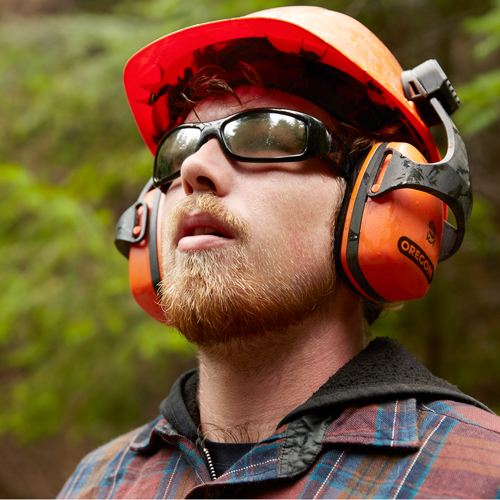
Un casque de sécurité est la principale protection pour la tête portée par les utilisateurs de tronçonneuses. Un casque de sécurité sert à protéger votre tête contre les chutes de branches, et peut contribuer à protéger le cerveau contre les blessures telles que les commotions cérébrales.

Les premiers casques de sécurité étaient fabriqués en aluminium. Si des casques en aluminium sont encore portés aujourd’hui, la majorité des casques de sécurité sont désormais en plastique.

Quel que soit le matériau que vous choisissez pour votre casque de sécurité, il est important que la structure soit solide. S’il présente des trous, des bosses, un mauvais serrage ou s’il est décoloré (dans le cas des casques de sécurité en plastique), il est temps d’acheter un nouveau casque ou de réparer le serrage.

Vous pouvez tester la structure de votre casque de sécurité en plastique en le serrant fort entre vos mains. Si le casque revient à sa forme d’origine lorsque vous desserrez vos mains, il est structurellement solide. Si ce n’est pas le cas, remplacez votre casque immédiatement.

De nombreux casques vendus aujourd’hui sont dotés de dispositifs de sécurité supplémentaires. Certains casques de sécurité, comme ceux vendus par Oregon, sont équipés d’une visière. Les visières peuvent contribuer à prévenir les coupures et les éraflures causées par les branches, les copeaux de bois volants et la sciure. Les casques Oregon comprennent également des protections antibruit intégrées pour la protection contre le bruit.

Voir les produits

Prévenir la perte de la vue avec des lunettes de protection

Pour choisir des lunettes de protection, il existe plusieurs options, notamment :

Écran facial

Écran facial

Se fixe directement sur votre casque de sécurité.
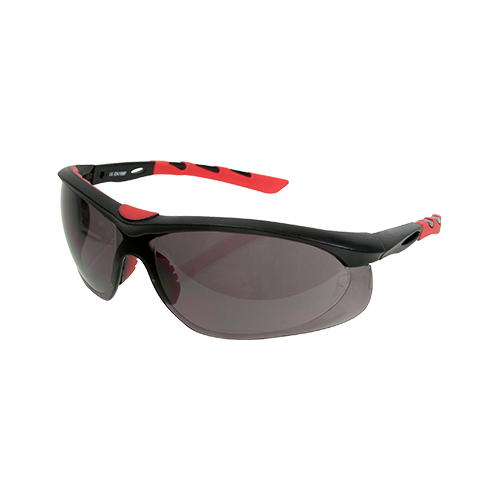
Lunettes de protection

Lunettes de protection

La principale norme de sécurité américaine pour les lunettes de protection est ANSI Z87.1+. La majorité des produits de protection oculaire d’Oregon répondent à cette norme.
 
Hearing protection

Hearing protection

There are two common forms of hearing protection used to block chain saw noise – earplugs and earmuffs. Regardless of which form of hearing protection you choose, be sure to look for the noise reduction rating (NRR). For example, Oregon’s protective earmuffs have a NRR of 21DB or 24DB.

Earplugs can be standard issue or come connected with a cord or band. Regardless of the type, earplugs need to be inserted correctly in order to provide the best hearing protection.

To ensure the best fit and greatest protection, follow these steps:
1. Roll the earplug into a small cylinder.
2. Pull your ear up and back to open the ear canal.
3. Push the earplug into your ear canal, holding it there for a few seconds until it fills your ear canal. This will provide the best fit and greatest protection.

Another hearing protection option are earmuffs. Earmuffs will provide you with the most protection from excessive noise. In addition to the NRR, you’ll also want to consider the weight of the earmuffs and how comfortable they are. Most protective earmuffs will have PVC cushions for added comfort.

For additional protection, you can wear both earplugs and earmuffs.

See products


Use Chain Saw Chaps to Reduce Chainsaw Related Injuries


Chainsaw chaps are coverings worn over your pants to protect your legs from being cut. If your legs are accidentally struck by the chain saw’s chain and bar, the chaps stop the chain saw by jamming the fly wheel, which means the chain saw won’t cut through to the leg. While you may be bruised, you likely won’t need stitches. You’ll also want to make sure that your chaps meet international safety standards. Oregon’s apron and full-wrap chainsaw chaps conform to ASTM F1897-08 and are UL classified. If your chainsaw chaps have sustained saw damage, they should not be used again and should be replaced.


There Are Two Options Available for Chainsaw Chaps

Apron Chaps

Apron Chaps

Apron chaps only protect the front of your upper leg
Full-Wrap Chaps

Full-Wrap Chaps

Full-wrap chaps wrap around the lower leg to protect the rear calf region. To ensure your chaps fit properly, make sure the bottom of your chaps come down to the top of your work boots.
Reduce Foot Injuries with The Right Logging Boots

Reduce Foot Injuries with The Right Logging Boots

Not all logging boots protect against chainsaw cuts. Choose logging boots that have been specifically designed to protect you from chain saw injuries like steel toe logging boots that are cut-through resistant and help prevent impact injuries.

See products
Chainsaw Gloves

Chain Saw Gloves

Chainsaw gloves should always be worn while cutting to protect you from cuts and scrapes and to prevent contact with oils and fuels. 

See products


FAQ

How long should chainsaw chaps be?

Precise measurement is an important step in ensuring that you get chaps that are the right size. If chaps are too short, your legs could be exposed. Chaps that are too long, however, are also unsafe since they could cause you to trip.

Chaps should be long enough to cover the tops of your boots. To know how long your chaps should be, measure from your waist (just below the belt where the chaps will sit) to the beginning of your foot. This length will provide full coverage and protection. 


How do I choose chainsaw chaps?

Before choosing chainsaw chaps, check to see that the chainsaw chaps comply with safety standards issued by international certifying bodies and that they have been tested by professionals to ensure the protection from contact with a chainsaw. Chaps are rated by OSHA and ASTM (the American Society for Testing and Materials) and ANSI (American National Standards Institute) and receive certification from UL (Underwriters Laboratories). In order for chaps to have an OSHA rating, they must be made out of cut-resistant material and provide coverage from the beginning of the thigh to the top of the boot on each leg. ASTM has two standards for chaps: a standard for the performance of chaps (ASTM F1897-14) and a standard for testing chaps (ASTM F1414). Chainsaw chaps with the UL label meet ASTM’s performance and testing standards. 

When evaluating the material of chainsaw chaps, research the number of layers as well as how thick they are. Each chap has a different number of layers – the more layers the better. Oregon’s Apron Chaps and Full-Wrap Chaps are made from eight layers of fabric. When evaluating the thickness of chap layers look for the term “denier,” which denotes how thick chaps are. Pay attention to sizing in order to maximize your protection from injury. The length given for a pair of chaps is the overall length – not the length of the inseam. For more information on how to find the right size, see the question “How long should chainsaw chaps be?” For even more information about chainsaw chaps, read our chainsaw protective gear instructional guide.


How do you wash chainsaw chaps?

In order to protect the material structure, you should always wash your chainsaw chaps by hand and then hang them to dry. 


How do chainsaw chaps work?

Remember, chainsaw chaps are not cut proof. What they do is prevent the moving chain from cutting your leg. The resistant material in the chaps tangle up in the chain, providing a few seconds to move your chainsaw away from you or shut it off completely. You will be protected if you should stumble and accidentally trip while walking.


Related Topics

Cold Weather Cutting

Cold Weather Cutting

Cutting in cold conditions, snow, and into frozen wood can cause rapid wear and possible breakage of saw chain. Use these tips to keep cold-weather wear to a minimum:
 
Chainsaw Safety

Chainsaw Safety

Learn the risks associated with operating a chainsaw and what you can do to reduce the chance of chainsaw related injuries. 
Shop Retailers

Shop Retailers

Find retail partners offering Oregon products for online and in-store purchase.
Retour au début