Ignorar e seguir para o conteúdo Ignorar e seguir para o menu de navegação

Sharpening Chainsaw Chain

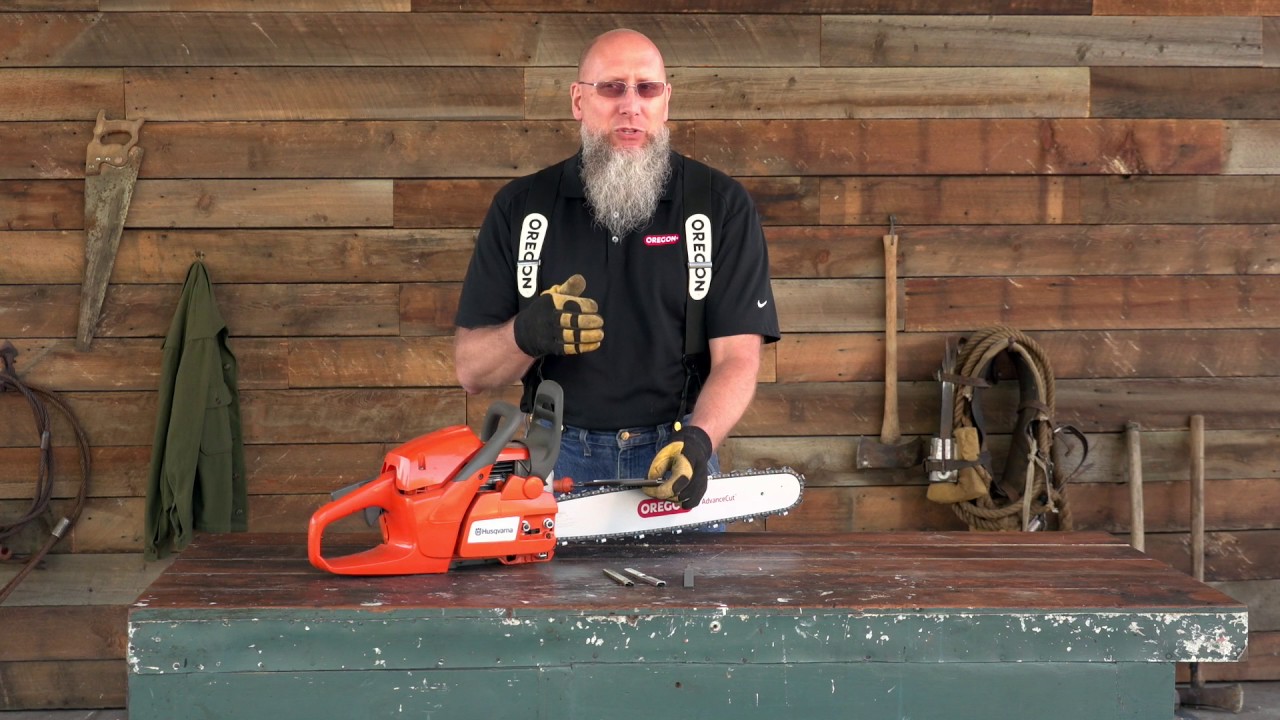
Video: How To Sharpen a Chainsaw

When it comes to sharpening your chainsaw chain, there are a few methods to consider. You can sharpen it by hand using a round chainsaw file or opt for the convenience of an electric chainsaw grinder. For square chains used for cutting large trees, there's the square filing method. Make sure to refer to your grinder manual for the setup and usage instructions. It's important to sharpen your chain according to the manufacturer's recommendations for optimal performance.

Parts of a Chain Cutter

Parts of a Chain Cutter

1. Top Plate: The top plate is the uppermost part of the cutter, serving as the primary contact point with the material being cut.


2. Cutting Corner: The cutting corner is the edge or area of the cutter responsible for making the actual cutting action.


3. Slide Plate: The slide plate is a movable part of the cutter that facilitates smooth and controlled cutting motion.


4. Gullet: The gullet is the recessed area between the cutting teeth, which helps in chip removal during cutting.


5. Depth Gauge: The depth gauge controls the amount of material removed during each cutting pass, ensuring precision and accuracy.


6. Heel: The heel of the cutter provides stability and support during the cutting process.


7. Rivet Hole: The rivet hole is the location where the rivet secures different parts of the cutter together.


8. Toe: The front part of the cutter that aids in guiding and positioning during use.

Preparation for Saw Chain Sharpening

If you have any questions about sharpening your Oregon chain, call our technical services department at 800-223-5168, Monday through Friday between 7:30 a.m. & 4 p.m. PDT.

Step 1

Step 1

Ensure that your chainsaw is turned off before you start any maintenance. It's essential to know the type of chain and sharpening angle specifications for your chainsaw. You can find this information in your chainsaw owner's manual or on the chain pack. If you're unsure about your chain's type or number, seek advice from your Oregon chain dealer or contact the technical services department at 800-223-5168.
Step 2

Step 2

Put on your protective gear, including gloves and eye wear protection. If you are sharpening the chain while it's attached to the chainsaw bar, make sure it’s properly tensioned first.

Step 3

Step 3

Wipe any oil and grease off the chain to prevent build-up on the file's teeth or the grinding wheel.
Step 4

Step 4

Inspect the chainsaw chain for damage, including:
  • Proper installation of tie straps and drive links
  • Cracked or broken cutters, cutter top plates or tie straps
  • Bent, cracked or burned drive links
  • Severe abrasive damage
  • Abnormally worn chain
  • Wear patterns that may indicate a worn bar or sprocket. Refer to the Oregon Saw Chain Safety & Maintenance Manual for more information.
  • Loose rivets (Try rotating the rivets with your fingers – if you can do this, they are too loose.)
Refer to the Oregon® Saw Chain Safety & Maintenance Manual for more information.

Step 5

Step 5

If you are filing your chainsaw chain by hand, select and use the correct file guide and file for your saw chain.  This is the easiest way to file saw chain.
Step 6

Step 6

If the chain is broken, repair or replace it. Next, check and adjust depth gauge. Then, sharpen your chain according to the manufacturer’s recommendations, keeping it balanced.

How To Sharpen Chainsaw Chain with a Round File

The goal of filing is to remove all damage, while keeping the chainsaw chain balanced.

Step 1

Step 1

Engage the chain brake, then lightly clamp the chainsaw bar in a bench vice. Release the chain brake to rotate the chain by hand (be sure to wear gloves when you do this).
Tool Tip

Tool Tip

Operate chain brake by pushing the top-hand guard forward. Pull guard back to disengage.
Step 2

Step 2

If you are using a file guide, place it over the cutter with the file in the gullet (between the cutter and the depth gauge). Ensure the file guide has the proper contact points on the cutter top plate and the depth gauge.
Step 3

Step 3

Hold the file in the correct location so that 1/5", or 20%, of the file’s diameter is positioned above the cutter’s top plate. Using an Oregon File Guide is the easiest way to hold the file in this position. Make sure the top plate filing angle is parallel to chainsaw chain centerline.
Step 4

Step 4

Locate the cutter with the most damage and use steady, even strokes (the "full file length") to remove the damage while counting the number of file strokes. TIP: You’ll know the damage is removed when the cutter has a shiny, silver face. File all the cutters with the same number of strokes per cutter from the inside to the outside so that the cutter lengths are equal. 
Step 5

Step 5

Complete all the cutters on one side of the chain before turning your chain to switch sides. One you are done, Once you are done, repeat the process for the other side of the chain, ensuring all lengths are equal. Remember, to recheck depth gauges.
Step 6

Step 6

File back to remove damage and keep top plates equal in length. Recheck depth gauges.

How To Sharpen Chain with an Oregon® Electric Chainsaw Chain Sharpener

Step 1

Step 1

Check the grinder wheel shape. 

 
Tool Tip

Tool Tip

Before installing a new or used grinding wheel, it's important to check the wheel for integrity. You can do this by tapping the wheel with a metal object, such as an Allen Wrench. If you hear a dull thud, it's possible that the wheel may be damaged from the inside, and in that case, a replacement wheel may be needed.
Step 2

Step 2

Set the vise assembly to the correct top plate filing angle. Refer to your grinder’s manual for the best way to do this. We suggest grinding your chain to meet the manufacturers's recommedations.
Step 3

Step 3

Use the recommended top-plate cutting angle to set the proper grinder head angle.
Step 4

Step 4

Ensure that the vise-blocking handle is screwed in tight and that the chain is blocked. Turn on the electric sharpener and sharpen the cutter by lowering the arm-motor unit. Tip: Use a quick tapping motion to minimize overheating of the ground surface.Carefully proceed with sharpening your chain according to the manufaturer's recommendations.
Step 5

Step 5

When sharpening the cutter is complete, raise the arm and loosen the handle to run the saw chain forward to position the next cutter to be sharpened.
Step 6

Step 6

Use the vise-block handle again and continue to sharpen your chain. When all the cutters are sharpened, turn the machine off and unplug the power cable. Dress vitrified grinding wheels often to maintain correct shape using a rotary dresser or a dressing brick.


Tips for After Sharpening a Chainsaw Chain

Step 1

Step 1

Check and adjust depth gauges.
Step 2

Step 2

Start by cleaning off any debris from the chain, and then thoroughly lubricate it with chainsaw bar and chain oil. For optimal results, soak the chain overnight in the bar and chain oil.
Step 3

Step 3

After sharpening the saw chain, make sure to store it in a container with lubricant so that it's ready for its next use.
Learn More about Square-Ground Filing

Learn More about Square-Ground Filing

The term “square-ground filing” refers to the process of using a file to sharpen square-ground chain by hand. Square-ground filing can be much more difficult than round filing and requires different techniques. Because square-ground chain is less forgiving of errors, it is important that the corner alignment and filing angles be precise.

Learning the proper method for square-ground filing can take time. In fact, most people don’t get it right on their first try. So, don’t get discouraged if your chain doesn’t perform the way that you expect it to on the first attempt.
 

FAQ


When Should You Perform Square-Ground Filing?

Since square-ground chain is not very common, most chain saw operators will never have an occasion to perform filing with a square file. Square-ground chain is only used in conjunction with longer guide bars designed to cut larger trees. However, the performance advantages of cutting timber with square-ground chain can outweigh the fact the square-ground filing can be more difficult and affords less room for error.


Things to Keep in Mind the First Time You File Square-Ground Chain

While square-ground filing can be done out in the field, a shop with a light and a work bench is an ideal learning space. It’s easiest to file in a setting where your cutters are stable and there’s lots of light.


The first square-ground chain you sharpen should be a square-ground chisel chain that still has its factory grind. Do not use an old chain – especially one that has been previously filed. A chain that has already been resharpened may still have gullet material attached that needs to be removed.


Tip: A second, new square-ground chisel chain on hand can be a handy reference point for square-ground chain sharpening. You can look at the cutter teeth on the second chain to see what the cutter teeth should look like.
 

Three Rules for Sharpening Square-Ground Chain

  1. Keep the corner of the file aligned with the cutter’s tooth
  2. Maintain the angles of the cutter’s tooth
  3. Repeat the same angles on every tooth; all cutters need to be the same.


Where to Position the Square File

A square file sharpens the top-plate and the side plate, simultaneously.

This creates a line, (A), where the top-plate cutting angle meets the side-plate angle. For best results, file so that the line intersects the cutting corner (B).
To properly sharpen the cutter, use the correct filing position, as shown here from three different points of view. 

Square Filing Tip

Before you begin filing, place you square file next to the fact of a cutter tooth. Decide on the corner of the file you will align with the corner of the cutter tooth. When the corner is aligned, reposition the file on its other axis so the other surfaces match up. Reference the above graphics so you know what the right filing position looks like. 
 

What Direction Should the Square-Ground Chain be Filed?

What Direction Should the Square-Ground Chain be Filed?

Once your file is positioned, it’s time to sharpen. But what direction should you use?

Square saw chain should be filed from the outside in (in a downward direction). This leaves a better edge on the chromed cutting surfaces and makes it easier to keep the file’s position, and the resulting cutting edges, in correct alignment as shown in the preceding File Positioning section. However, filing from the outside in will wear out your file faster.

Some square saw chain users may prefer to file from the inside out (in an upward direction). You should be aware that inside-out filing is much more difficult.

Whichever direction you choose, be sure your file and your cutting edges stay positioned as shown in the preceding section. File all cutters on one side of the saw chain, then reverse the saw chain and repeat the process. Use the same file positions for cutters on the opposite side of the saw chain.

Sharpening with a Square File

To start sharpening after you’ve gotten your angles lined up, take a file strokes with the file, then remove the remove and take a look at the cutter tooth. There will be some marks where the file has removed some steel. Adjust the file based on what you see. Continue sharpening until the tooth looks as sharp as the one of the reference chain.
 

After producing the first sharp cutter tooth, it’s time to move on and make the rest of the teeth look the same. The best way to do this is to look at the chain. Counting the number of strokes is only providing a rough estimate, since not all strokes remove the same amount of material.
 

Each tooth needs to be the same, because this will help ensure a consistent cut. If one tooth is bigger or smaller than the others, it will cut off different-sized chunks of wood, causing the chain to chatter and vibrate. This inaccuracy can also make it so the chain cuts crookedly.
 

What Kind of Square File Should You Use?

What Kind of Square File Should You Use?

There are three different types of square files: hexagon, double bevel, and “goofy”.

The most popular file type is the hexagon shape, also known as “triangular chisel file”. True to its name, a hexagonal file has six sides, plus three corners which act as the filing edge. Out of the three file types, the hexagonal file is the smallest in size and usually fits well into 3/8” pitch chain.

The other two file types – double bevel and “goofy” have two corners for sharpening and also allow people to lower depth gauges with surfaces on the top and bottom of the file.

Only use files specially designed for square-ground chisel cutters, available from your chain saw dealer.

Gullet Filing

Why File Gullet?

Why File Gullet?

Approximately every fifth sharpening, you will need to clean out the gullets by filing them back with a 7/32" round file. File gullets from the inside-out (the side opposite direction than sharpening), and always leave a 1/8" shelf behind the gullet. If you do not clean the gullets regularly, the outer edge will eventually prevent the working corners of your cutters from getting an adequate bite into the wood.
Correct Gullet Filing (Right)

Correct Gullet Filing (Right)

Clearance is maintained between the working corner and the gullet’s outer edge. Some square-ground chain users may prefer to file from the inside out (in an upward direction). Inside-out filing is much more difficult. Whichever direction you choose, be sure your file and your cutting edges stay positioned as previously shown. File all cutters on one side of the chain, then reverse the chain and repeat the process.
Incorrect Gullet Filing (Wrong)

Incorrect Gullet Filing (Wrong)

If the gullet is filed the wrong way, there is little or no clearance between the working corner and the gullet’s outer edge. Incorrect: Little or no clearance between the working corner and the gullet’s outer edge.

FAQ

How do I sharpen my chain?

There are two main methods you can use for sharpening chainsaw chain by hand, using a round chainsaw file or an electric chainsaw grinder. Learn how to sharpen chainsaw chain with our Technical Tips video.


How do I know when my chain is dull, and when should I sharpen it?

If it is no longer self-feeding, you have to push on the saw, or the waste material from your saw creates sawdust, it is time to sharpen your chainsaw chain. A good rule of thumb is to sharpen your chain every time you refill gas. 
 

Related Topics

Voltar para o início